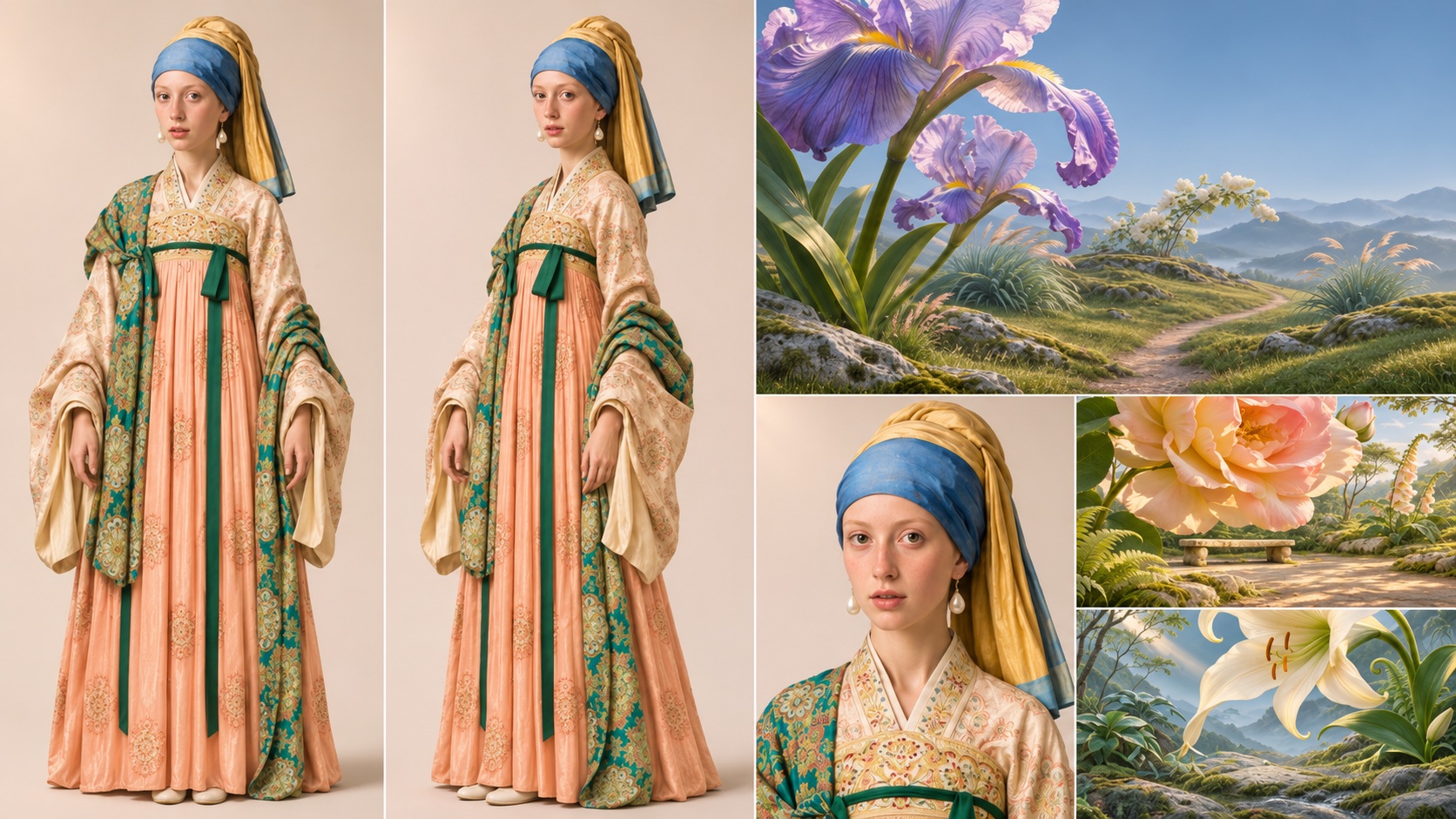
That is the appeal of MAGI-2, Sand.ai’s latest flagship video model. Its strongest argument combines image quality, creative control, and affordable iteration.
As of November 27, 2026, MAGI-2 leads Artificial Analysis’s image-to-video-with-audio leaderboard. That supports a strong claim to leadership in this category, although it does not establish that the model wins every video task. Artificial Analysis
Leading quality at a much lower price
The numbers explain why MAGI-2 is attracting attention.
| Model | Image-to-video Elo | Listed API price per minute |
|---|---|---|
| MAGI-2 | 1,163 | $4.80 |
| Dreamina Seedance 2.5 | 1,158 | $34.12 |
| Kling 4.0 | 1,139 | $12.60 |
These figures come from Artificial Analysis’s image-to-video-with-audio leaderboard. MAGI-2 and Seedance 2.5 have overlapping confidence intervals, so their small score difference is not a decisive quality victory. The listed price gap is much clearer: MAGI-2 costs roughly one-seventh as much. Artificial Analysis
For creators, that changes the economics of experimentation. A lower generation cost gives you more opportunities to test a different opening, adjust an expression, or explore another visual style before choosing the final version.
Higgsfield’s API documentation lists MAGI-2 at $0.08 per second, including generated audio. A 30-second generation therefore costs $2.40 through that API.
Enough time to tell a story
The supplied QbitAI article highlights one of MAGI-2’s most useful capabilities: generating up to 30 seconds of 1080p video in one pass.
That gives a scene room to develop. A character can enter, interact with the setting, and react to an event within the same generation.
One demonstration moves continuously through five famous paintings, including Van Gogh’s The Starry Night and Monet’s Water Lilies. The challenge extends beyond reproducing their appearance: camera movement and spatial relationships must remain coherent as the artistic style changes.
For filmmakers and advertisers, this is an appealing direction. Longer coherent generations could reduce the work required to assemble separate clips into a convincing sequence.
Your references become part of the direction
A commercial brief usually contains more than a text prompt. There may be a specific character, a product photograph, a location, a movement reference, and an audio track.
MAGI-2 supports up to 20 reference assets: 10 images, five videos, and five audio clips. Those inputs can help define what appears on screen, how it moves, and how it sounds.
The QbitAI article illustrates this with a journey through a world of giant flowers. Reference images establish the character’s appearance, clothing, and several environments, while leaves and petals provide transitions between scenes.
The practical benefit is creative continuity. A creator can develop a recognizable visual identity across a sequence instead of describing every detail repeatedly.
More precise control over the scene
Beautiful footage becomes more useful when it follows the brief.
The article describes detailed control over character positions, action sequences, camera movement, and event timing. It also discusses targeted editing: changing selected elements of an existing video rather than rebuilding the entire scene.
Imagine developing a product advertisement. Once the performance and camera movement work, the next revision may concern the product, the actor, or the spoken language. Editing those elements could make each successful generation a starting point for further versions.
The article reports support for prompts of up to 20,000 characters. Access platforms can impose different limits, however: Higgsfield’s current reference-to-video API documents a 15,000-character maximum.
Early signs of a model that can plan
Some of MAGI-2’s most intriguing demonstrations involve its pre-trained research checkpoint.
In the boat conversation featured in the article, a short sequence of story beats guides an exchange between Lu Su and Zhuge Liang. The model supplies camera choices, reactions, and transitions without a fully specified shot list.
Another demonstration shows the checkpoint completing a Sudoku puzzle.
These examples suggest research potential, but they should be understood carefully. Sand.ai reports that such reasoning and planning behaviors became harder to elicit after post-training for visual polish. They are demonstrations of emerging capabilities, rather than dependable promises for every production generation. Sand.ai
Why MAGI-2 deserves a place in your workflow
MAGI-2 still has limitations. Sand.ai acknowledges occasional problems with very fast motion, overly smooth local movement in some animation, and complex audio scenes. Its announced open-source release also remains a future commitment in the launch report. Sand.ai
Even with those qualifications, the case is compelling.
MAGI-2 combines a leading image-to-video benchmark result with longer scenes, flexible references, synchronized audio, and comparatively inexpensive generation. For creators who need to explore ideas and refine them through multiple versions, that combination may matter more than a small difference in leaderboard scores.
If your definition of the best video model includes both the quality of the result and the freedom to keep creating, MAGI-2 makes a strong case.